Screwball Film Series – The Art of Conflict
May 5, 2026 – June 2, 2026 | Zeughauskino and BBAW

Screwball comedies are commonly associated with rapid-fire dialogue and physical slapstick, eccentric supporting characters, absurd coincidences, and the playful reversal of gender and class dynamics. The film series Screwball – The Art of Conflict, a collaboration of the Annual Theme "Resolving Conflicts!" by the Berlin-Brandenburg Academy of Sciences and Humanities and the Zeughauskino, understands Screwball as a cinematic conflict resolution machine in which conflicts are not escalated toward a goal, but are continuously created, shifted, transformed, and rearranged.
“Resolving Conflicts!” deals with historical and contemporary forms and practices of conflict resolution. It asks how conflicts are negotiated in science, art, and society, what strategies have been developed to resolve them, and how different media are used to reflect on conflicts productively. As part of the Annual Theme's public program, the film series focuses on a comedic genre that emerged in the early 1930s during the Great Depression in the United States and became one of the most influential narrative forms of classic Hollywood cinema.
While romantic comedies tend to follow a relatively straightforward path from the first encounter between two characters to a harmonious happy ending, Screwball comedies draw their energy from everything that happens in between. Misunderstandings and power games, embarrassing scandals and ludicrous revelations, false identities and social masquerades are not merely obstacles on the path to reconciliation, but rather what breathes life into the cinematic world. The conflict is not carefully constructed in order to be overcome, but rather to be excessively exhausted—until it wears itself out, dissolves, or transforms.
It is precisely in these moments that Screwball comedy offers a different perspective on conflict resolution. Sometimes the central conflict recedes into the background or is temporarily forgotten, sometimes it becomes disintegrated because the initial situation is fundamentally reevaluated, and sometimes it finds a temporary resolution. Solutions do not appear as definitive assertions of success, but as provisional arrangements. Accordingly, many Screwball films do not end with a grand gesture of reconciliation, but with a tongue-in-cheek happy ending that is aware of its own makeshift nature.
“Resolving conflicts!” Screwball comedy puts an emphasis on the Annual Theme's exlamation mark. In Screwball comedy, conflict is not primarily a big question mark—the one problem that needs to be overcome—but rather a cascade of exclamation marks: a constant impetus to speak, to act, to reflect, to move forward.
The series Screwball – The Art of Conflict, curated by Till Kadritzke, brings together four classic Screwball comedies from the 1930s and 1940s, as well as an update from the 1970s. In their different approaches to conflict, the films shift the focus from the outcome to the process – and show that “resolving conflicts” can also mean changing your way of thinking about conflicts.
You can view the program here.
For the screenings at the Zeughauskino you can purchase tickets here.
For the screening at BBAW you can sign up here.
Lunchtime Salon | “Berlin-Brandenburg: A Focus Region for Water Conflicts (and Solutions) in Germany?”
June 3, 2026 | 12 pm | Akademiegebäude am Gendarmenmarkt | Einstein Saal | Jägerstraße 22/23 | 10117 Berlin

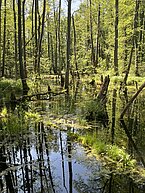
Dry periods in the Berlin-Brandenburg region are increasing in duration and frequency. At the same time, we are seeing more extreme rainfall, especially in the summer months. The decline in winter rainfall, higher temperatures leading to increased evaporation losses, and falling groundwater levels combined with increased water consumption due to population growth and industrial use are causing numerous conflicts over water supply in the region.
Farmers are experiencing crop losses, soil damage, and more difficult operational planning conditions. Forestry is suffering from an increased risk of drought stress, susceptibility to pests, and forest fires. In the city of Berlin, urbanization is leading to the redesign and sealing of large areas of land and to changes in underground flow paths, which is reducing groundwater recharge rates and making it difficult to ensure an adequate water supply for urban green spaces and trees. At the same time, protection against flooding is more important than ever in view of increasingly frequent heavy rainfall events.
A lecture followed by a public discussion and lunch with Academy Member Dörthe Tetzlaff (Head of the Department of Ecohydrology and Biogeochemistry at the Leibniz Institute of Freshwater Ecology and Inland Fisheries), moderated by Milena Rinck (Scientific Coordinator of the BBAW's Annual Theme “Resolving Conflicts!”).
Registration is required. The respective link will follow shortly.
Berlin-Brandenburg Academy of Sciences and Humanities
Annual Theme 2025|26 "Resolving Conflicts!"

© 2018-2026